

Siloed Approach to World’s Environmental and Social Challenges Risks Achievement of UN’s SDGs

[Click image to enlarge]
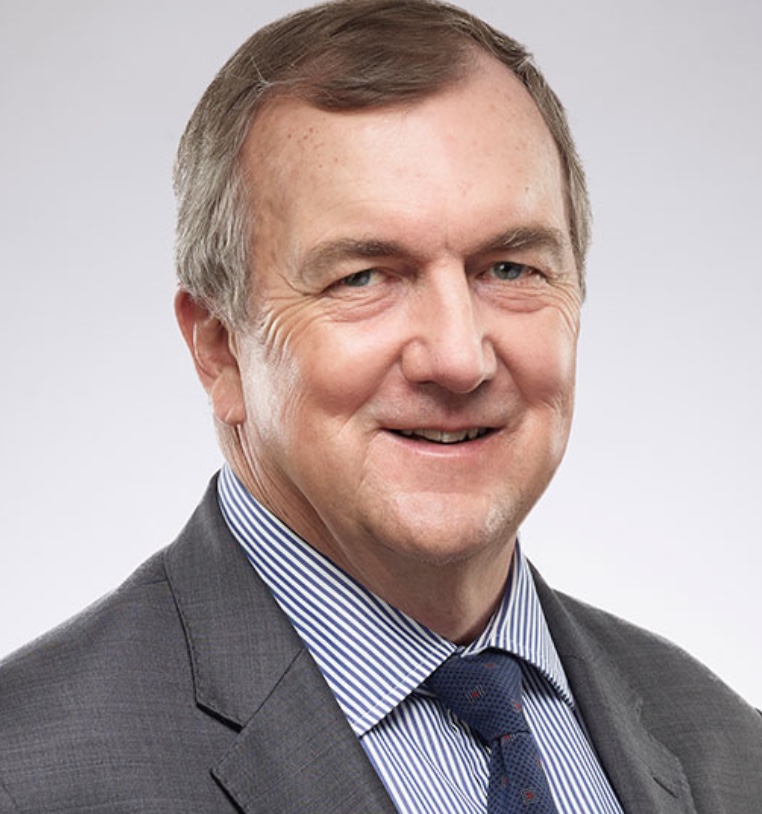
Mark Bristow, president and chief executive of Barrick Gold Corporation
[Click image to enlarge]
The achievement of the United Nations’ 17 Sustainable Development Goals (SDGs) by 2030 will not be met as long as the world’s key environmental and social challenges are dealt with separately, says Mark Bristow, president and chief executive of Barrick Gold Corporation.
“The 17 SDGs are interconnected and a contribution to one will affect the outcome of another. There are synergies between improving economic prosperity, health, education, climate change, access to water and protection of biodiversity, and the path to achievement lies in collaborative thinking and solutions. Therefore, an integrated approach is required to meet the world’s triple challenge of poverty, climate change and nature loss,” said Bristow.
Barrick attended the COP27 in Egypt as part of a delegation of the International Council on Mining and Metals (ICMM) and Bristow says the palpable tension between the developed and developing world as well as between policy-makers, corporations, governments, and investors was testament to the flawed approach of treating each aspect separately, encapsulated by the silos of E, S and G.
“That is why, at Barrick, we have adopted a holistic and integrated approach to sustainability, which we applied within our business practices long before ESG became an investment mantra,” said Bristow.
Barrick’s integrated approach to sustainability is embedded throughout the business and is credited with resolving long-standing legacy issues — notably the resurrection of the North Mara and Bulyanhulu mines through a formal partnership with the Tanzanian government, in line with Barrick’s philosophy of partnership with its stakeholders.
Bristow says a good business also has to be a good citizen, particularly in emerging countries where mining companies have a moral obligation as well as a commercial motivation to help develop economies and uplift people.
“If the gold mining industry is to survive in the changing world, it must recognize and acknowledge its duty to all stakeholders, and make sure that they benefit fairly from the value it creates,” said Bristow.
Barrick’s climate action and resilience strategy does not only focus on emissions reductions, nor only on business resilience, but considers the role and interconnections that nature plays in the environment. It considers how the company can build community resilience through socio-economic upliftment, as well as sustainable ecosystem services and biodiversity management, which in turn has positive consequences for nature and climate impacts.
“We invested in partnerships to conserve, protect, and reconnect protected areas, long before any metrics for measuring such impacts became the collective focus. We looked towards nature to develop interconnected solutions, such as constructing the largest wetland in Africa, long before it was an output of climate disclosures. We tracked the social outcomes of our community investments, such as girls school attendance and graduation rates, long before the realization that the dollars spent isn’t as important as understanding the ‘social impact’ of such investment. And we have long been speaking about the integration of the environmental and social aspects, and the need for global socio-economic upliftment,” said Bristow.
“A transition to a green economy must be a just transition and must focus on the upliftment of those countries left behind in the developing world. Over the past two decades, only 2 percent of global renewable energy investment has gone to Africa, most of which is also unevenly distributed. At Barrick, we see the opportunity that the developing world presents, and we trust in our sustainability strategy to deliver the results to all our stakeholders — especially uplifting our host communities,” added Bristow.
About Barrick Gold
On January 1, 2019, a new Barrick was born as a result of the merger between Barrick Gold Corporation and Randgold Resources Limited. The merger has created a sector-leading gold company which owns five of the industry’s Top 10 Tier One gold assets Cortez and Goldstrike in Nevada, in the United States (100 percent); Kibali in the Democratic Republic of the Congo (45 percent); Loulo-Gounkoto in Mali (80 percent); and Pueblo Viejo in the Dominican Republic (60 percent) and two with the potential to become the gold assets of the first level: Goldrush / Fourmile (100 percent) and Turquoise Ridge (75 percent), both in the United States. With mining operations and projects in 15 countries, including Argentina, Australia, Canada, Chile, the Ivory Coast, the Democratic Republic of the Congo, the Dominican Republic, Mali, Papua New Guinea, Peru, Saudi Arabia, Senegal, the United States, and Zambia, Barrick has the lowest total cash cost position among its senior gold peers and a diversified asset portfolio positioned for growth in many of the world’s most prolific gold districts.
To stop by Barrick’s website, CLICK HERE
Be in-the-know when you’re on-the-go!
FREE eNews delivery service to your email twice-weekly. With a focus on lead-driven news, our news service will help you develop new business contacts on an on-going basis.
CLICK HERE to register your email address.
Copyright © 2022 Mining Connection LLC. All rights reserved. This material may not be published, broadcast, rewritten, or redistributed without permission.
For licensing permission, .(JavaScript must be enabled to view this email address)