



Burkina Faso Nationalizes Five Assets, Displays Risks of Investing in Africa
[Click image to enlarge]
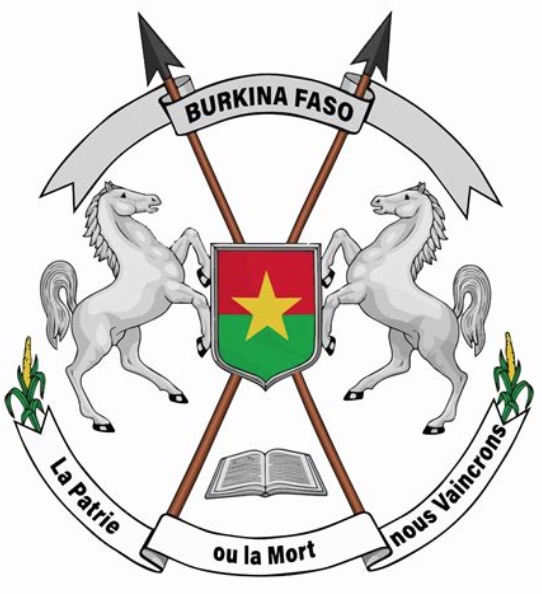
The Government of Burkina Faso has nationalized five gold mining assets and given them over to Société de Participation Minière du Burkina (SOPAMIB), a state operated miner.
This finalizes a process that started August of last year to increase control over its mineral resources, according to a decree published on Wednesday.
The government established SOPAMIB to manage and operate key mining assets across the country. It began the nationalization process last August and acquired two mines formerly owned by Endeavour Mining. In April, the government announced plans to increase its stake in several foreign-run industrial mines.
It aims to boost national earnings from the country’s mineral wealth. In addition, it transferred two operating gold mines and three exploration licenses from Endeavour Mining and Lilium subsidiaries. The transaction involving these assets was interrupted. As a result, the state stepped in to take control. Also, this move strengthens government oversight of Burkina Faso’s most valuable resources.
“This acquisition is in line with the state’s policy of sovereign ownership of mining resources to optimise exploitation for the benefit of the population,” the decree stated.
This move follows similar patterns started by neighboring countries Mali and Niger to nationalize industries in order to regain control over their natural resources. The state took control of five assets: two operating gold mines and three exploration licenses.
Subsidiaries of London-listed Endeavour Mining and Lilium previously held these assets.
In addition, the transfer includes Wahgnion Gold SA, SEMAFO Boungou SA, Ressources Ferké SARL, Gryphon Minerals Burkina Faso SARL, and Lilium Mining Services Burkina Faso SARL. Also, the move expands government ownership across both producing and prospective sites.
BURKINA FASO IS AFRICA’S FOURTH-LARGEST GOLD PRODUCER
“This acquisition is in line with the state’s policy of sovereign ownership of mining resources to optimize exploitation for the benefit of the population,” the decree said.
Burkina Faso is Africa’s fourth-largest gold producer, with more than 57 tons of gold produced in 2023.
The government plans to continue nationalization efforts, aiming to increase state income. In addition, it expects higher revenues following a 27 percent surge in gold prices this year. Also, officials have framed the reforms as essential to reclaiming control over national resources.
The reforms have alarmed Western investors. These include Canada’s IAMGOLD Corporation, Nordgold, and Australia’s West African Resources. Concerns center on reduced operational certainty and possible future asset seizures.
Foreign companies operating in Africa often accept political and regulatory risk as the price of doing business. According to Serwah Prempeh of the Africa Policy Research Institute, Africa is frequently framed as high-risk due to perceived corruption, weak infrastructure, and policy uncertainty.
In addition, companies face abrupt legal changes, shifting ownership laws, and unpredictable taxation. Also, they must navigate local power dynamics and sudden nationalization efforts, like those now unfolding in Burkina Faso.
The state’s recent seizure of assets from Endeavour Mining and Lilium demonstrates the volatility.
Such moves may alarm Western investors, but they are not unprecedented. Prempeh argues that this risk is baked into the investment outlook for many African markets. Therefore, companies willing to tap into Africa’s rich mineral wealth must weigh high returns against potential upheaval.
For some, that trade-off remains worthwhile. For others, it raises serious questions about long-term strategy and exposure.
AFRICA REPRESENTS SIGNIFICANT INVESTOR RISK
Talk of nationalization in African mining sectors signals serious warning signs for investors and governments alike. Economist Léonce Ndikumana, co-author of On the Trail of Capital Flight, highlights how natural-resource wealth can trigger both foreign direct investment (FDI) inflows and sustained capital flight — especially in countries with weak institutions.
Also, the UNCTAD-backed analysis shows that resource-rich African nations often suffer from capital leakage even as they receive foreign investment, a pattern worsened by abrupt policy shifts or nationalization .
In addition, South Africa’s recent debates over mineral and land nationalization spooked investors. FDI plummeted, and capital redirected to more stable markets, according to South African business groups and the IFC .
Therefore, nationalization efforts risk triggering capital flight and deterring future foreign investment — potentially undermining long-term economic growth. For many African countries, the true cost of national control may be runaway capital and dwindling investor confidence.
Foreign investors increasingly view North American mining as a safer alternative to African operations.
In Canada and the U.S., companies benefit from robust legal protections, transparent regulations, and mature infrastructure. A blog in Canadian Mining Magazine notes that “injuries and fatalities in mining are rare in Canada these days due to rigorous safety standards and advanced equipment.”
The effects of nationalization naturally lead to decreased share prices for companies doing business in these countries. This serves only to benefit companies like Calibre Mining, recently acquired by Equinox Gold, which keep to stable mining jurisdictions.
Source: Mugglehead Magazine
Be in-the-know when you’re on-the-go!
FREE eNews delivery service to your email twice-weekly. With a focus on lead-driven news, our news service will help you develop new business contacts on an on-going basis.
CLICK HERE to register your email address.