






Look Back: Thirteen Coal Miners Entombed in Plymouth Mine
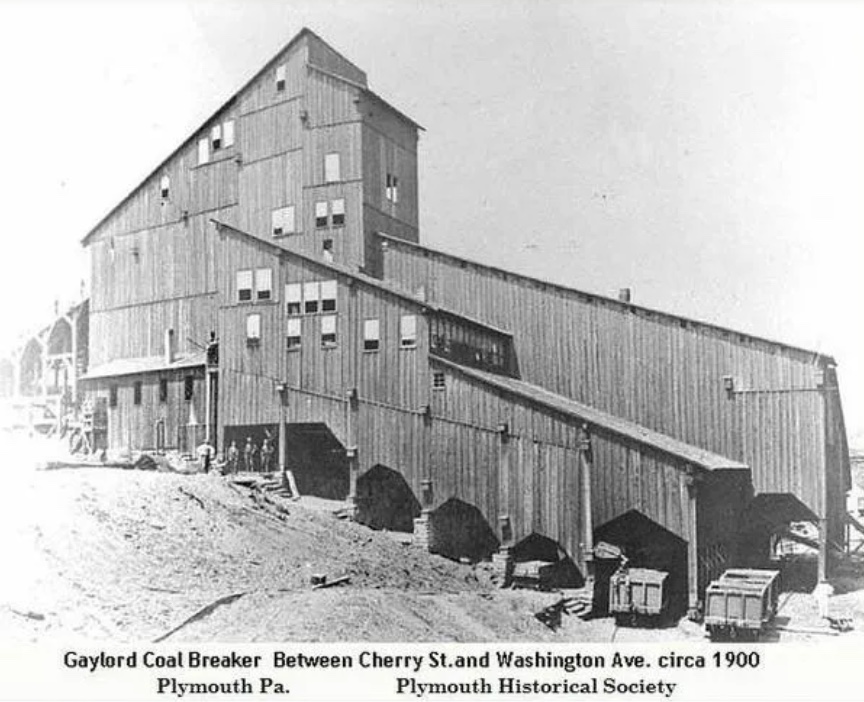
[Click image to enlarge]
Miners were pulled from the No. 13 shaft at the Gaylord Mine in Plymouth as there appeared to be a squeeze on the pillars, an indication that a roof collapse was imminent.
Thirteen men hauling and carrying timbers entered the shaft to shore up the roof. They never made it out alive.
The tragedy happened 128 years ago today on Feb. 13, 1894.
“A gang of timbermen going down to repair a damage mine are caught in a general fall, supposed to be cut off from light and air by 400 feet of solid coal,” the Evening Leader newspaper reported Feb. 13, 1894.
The Gaylord Mine and colliery was located between Washington Avenue, Cherry Street, and East Shawnee Avenue. Today, the area consist of mine strippings and trees with no memorial stone honoring the deceased miners.
“At 5 o’clock last evening (Feb. 12, 1894), the 13 men in charge of Mine Foreman Thomas Picton descended the shaft. Their object was to get as near as possible to the most dangerous part or where the squeeze was greatest, to stay its progress by standing heavy timber,” the Evening Leader reported.
The first collapse was reported at 3 o’clock in the morning (Feb. 13, 1894). Two hours later, a rescue party was organized to enter the shaft to search for the entombed men.
Rescuers were forced to retreat as the crashing of huge rocks reverberated through the narrow shaft and the rush and roar of the wind caused by the concussion was enough to strike terror to the strongest heart. Despite the setbacks, rescuers continued their efforts to search for survivors.
“Never since the long-to-be-remembered disaster at the Avondale colliery in 1869 in which over 100 men lost their lives and the Hartford disaster at Ashley when 27 men were roasted to death has there been such a disastrous accident to human life and valuable property in this vicinity as occurred at the Gaylord colliery of the Kingston Coal Company at Plymouth,” the Wilkes-Barre Record reported Feb. 14, 1894.
Another rescue attempt got rescuers 3,000 feet into the shaft but they were stopped by the shaft filled with collapsed rock and coal estimated to be 900 feet in length separating them from the entombed miners. Rescuers kept digging and removing the waste making little progress.
“At midnight the rescuers who were working the line breast, reached a solid pillar and tried to communicate with the men supposed to be inside by knocking on the coal, but repeated efforts brought no response and they all begin to think that the men are all dead,” the Record reported.
The entombed miners were all men from Plymouth and Plymouth Township: Mine Foreman Thomas Picton of Shawnee Avenue, Thomas Jones of Walnut Street, Richard Davis of McGinnis Street, John Morris of Center Avenue, James Kingdon of Walnut Street, Thomas Merrman of Walnut Street, Thomas Cole of Willow Street, Joseph Olds of Orchard Street, Daniel Morgan of Walnut Street, John Hammer of Shawnee Avenue, Peter McLaughlin of Avondale, Michael Walsh of Avondale, and Thomas Leyshon, who was a boarder in Picton’s home.
Rescue attempts continued for the next 15 days until Mine Superintendent Daniel Edwards discontinued any hope of finding the men alive.
“The story reached Avondale, and Mrs. Walsh and Mrs. McLaughlin, wives of two of the entombed men, came up to the colliery in terrible anguish of mind to implore Mr. Edwards to use every effort to at least find the bodies,” the Record reported March 1, 1894.
The rescue operation turned into a recovery effort as those searching for the bodies removed 10 to 30 feet of collapsed rock and coal a day. It wasn’t until March 12, 1894, when Lehshon’s miner’s lamp was found giving the indication that they were close to reaching the bodies. An undertaker in Plymouth prepared 13 wooden caskets that were placed outside the shaft where an estimated 500 people gathered when word of the miner’s lamp being found got around Plymouth.
The bodies began to be found on March 14 with the last body, that of Picton, recovered April 5, 1894. Burials took place in Shawnee Cemetery in Plymouth and Nanticoke City Cemetery.
By: Ed Lewis, Times Leader