





Biden Presidency Would Cast Shadow Over Shale
[Click image to enlarge]
The 2020 US presidential contest presents the country’s shale patch with two stark alternatives: continued vitality versus gradual or rapid decline. This is in sharp contrast to the two previous US polls, when the industry had comparatively little to fear from a victory by either the Democratic or Republican candidates.
A victory by Republican president Donald Trump would signal a continuation of policies that bolster and support the development of shale resources. For at least four more years there would be no significant federal government pressure on the oil and gas industry to reduce its carbon footprint.
Federal action would favor the development of fossil fuel energy resources over vigorously safeguarding the environment. And a host of subsidies, rules and regulations benefiting the hydrocarbon industry would remain in force. The only major negative component of a Trump re-election could be the continuation of a tariff war with China, which has adversely affected LNG exports.
PIVOTING TO THE LEFT
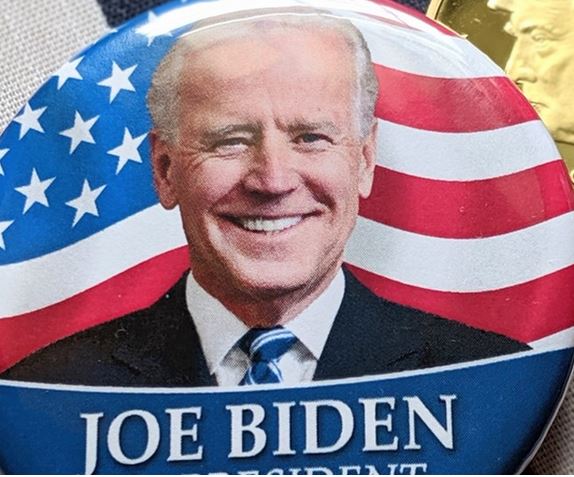
A victory for Democrat Joe Biden would result in one of two much different realities for the shale industry — both negative, but one much worse than the other.
Over the course of his 2020 campaign, Biden has moved increasingly to the ‘left’ on energy and the environment. His initial plan was widely panned for not doing enough to prevent climate change. In response, Biden adopted a more aggressive strategy that would hurt shale gas by requiring electricity generation to be carbon-free by 2035, as well as by incorporating administrative and regulatory policies that would hinder conventional and unconventional fossil fuel energy production.
Throughout his career, Biden has demonstrated a notable level of ideological and policy flexibility that has allowed him to adapt to the times, and there is no reason to believe this behavior will change when it comes to energy policy.
In particular, the median Democratic voter and elected official is now closer in policy preferences to the Green New Deal, a proposed package of legislation to address climate change, than to Biden’s plan.
For instance, even in Texas, the country’s leading conventional and unconventional oil and gas producer, an overwhelming majority of Democratic primary voters embrace core elements of the Green New Deal. For example, 76pc support policies to ensure 100pc of US energy comes from zero-emission sources by 2035 and 68pc favor ending most oil and natural gas drilling in Texas by the same year.
If victorious, Biden will face considerable pressure from the ascendant progressive wing of the Democratic Party to adopt its agenda on a wide range of policies such as Medicare for All, sweeping criminal justice reform, financial reform/consumer protection, gun control, immigration reform, slavery reparations, tax increases on the wealthy and the Green New Deal.
Biden will be forced to tack towards the progressive wing of the party on some of the above issues, to in turn resist drifting leftwards on others. Given the increasingly strong support among Democratic voters and politicians for aggressive action to slow climate change, it is quite possible that the environment will be one policy area where Biden will yield to the party’s left. This would mark a second further shift to the left for Biden this election cycle on energy and climate change policy compared to where he began his campaign.
KEEPING OPTIONS OPEN
Over the remaining two-and-a-half months, we should expect Biden to remain purposefully ambiguous on key aspects of his energy and climate policies. He will attempt to signal to progressives that he will embrace the core tenets of the Green New Deal once in office, while reassuring voters in key battleground states where shale is a major employer, such as Ohio and Pennsylvania.
A shale optimist may believe Biden’s messaging to these battleground states. Under this scenario, the industry would face only a gradual decline under Biden. But a shale pessimist may choose to believe the candidate’s messaging to the party’s progressive base. Under this scenario, the industry could experience a much more rapid decline.
By: Mark P Jones, Petroleum Economist
Mark P. Jones is a political science fellow and co-director of the presidential elections program at Rice University’s Baker Institute.