




Reserves of Critical Minerals Driving Mining Interest in South Dakota
[Click image to enlarge]
As worldwide demand for rare earth elements and other similar minerals rises — as do tensions among the United States, China and now Greenland — South Dakota is experiencing its own debate over its reserves of what are known as critical minerals.
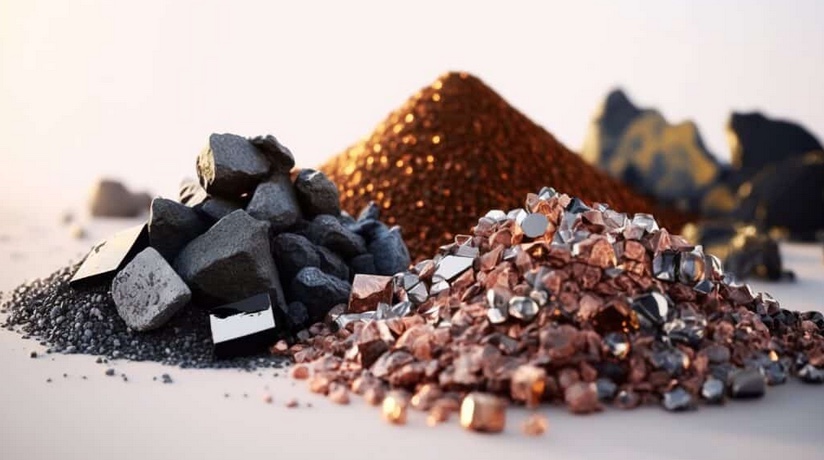
Rare earth elements are naturally occurring metallic materials found in sub-surface rocks that have been found to possess unique properties that make them very valuable and very useful, particularly in a variety of new technologies.
While 17 elements are classified as rare earth, the U.S. government has identified 60 minerals overall that are labeled critical minerals, which also include a number of other minerals that are seen as essential to the economic and military strength of the nation.
Of those 60 critical minerals, South Dakota is known to host reserves of 15 of them, none of which are rare earth minerals but which contain some of the same properties that make them valuable for industry and technology.
Critical minerals in the state include antimony, arsenic, barite, beryllium, cesium, fluorspar, graphite, lithium, manganese, niobium, tantalum, tellurium, tin, tungsten, and vanadium, according to the U.S. Geological Survey.
Those minerals are located in the western South Dakota counties of Custer, Fall River, Harding, Lawrence, Pennington, and Perkins as well as the central counties of Buffalo and Lyman.
Given its long history of mining, and based on new studies, the Black Hills region is well-known as a place where usable critical minerals are present, which is attracting exploratory mining, said Christopher Pellowski, a geology professor at South Dakota Mines in Rapid City.
Over the border, the state of Wyoming, with funding from the U.S. Department of Energy and private investors, has invested $170 million in a project to extract and separate rare earth minerals from rocks found in the Black Hills.
The company Rare Element Resources has spent $100 million and is seeking final federal permitting to mine rocks from the Bear Lodge region of northeast Wyoming that it believes contain an “incredibly rich deposit” of NdPr oxide (Neodymium-Praseodymium oxide). The mineral is a key component of high-strength permanent magnets.
Source: Associated Press
Be in-the-know when you’re on-the-go!
FREE eNews delivery service to your email twice-weekly. With a focus on lead-driven news, our news service will help you develop new business contacts on an on-going basis.
CLICK HERE to register your email address.