





New Technologies Can Give Coal a Makeover
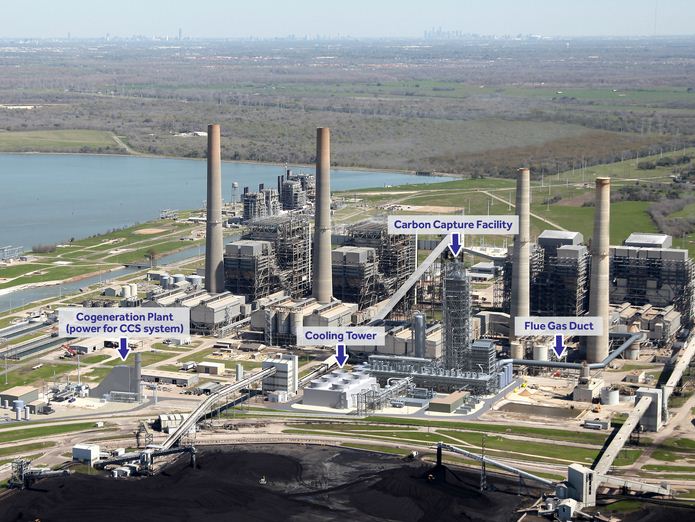
Petra Nova Carbon Capture Facility.
[Click image to enlarge]
Reducing the cost and improving the reliability of electricity are critical to meeting our national security goals, maintaining our economic competitiveness and fulfilling consumer demand at an affordable price. To meet our future demand, we have a wider selection of fuels and technologies available today than at any time in our history. The incoming Trump administration needs to bolster all of these options to at long last give America the independent, modern energy capacity it deserves.
Unfortunately, recent debates about our energy policy have paid little notice to new technologies that can make one crucial energy source more viable and environmentally sustainable. That fuel is coal. As a result and despite massive supplies of this low-cost resource, coal usage in the U.S. has been declining over the past eight years. Coal needs a makeover. For the sake of our economy and energy future, it needs to happen now.
Coal has been the bedrock of our nation’s electricity supply for a century, but environmental concerns including climate change have diminished its role. Our nation has made great strides to improve the efficiency and capacity of renewables like solar, wind and other technologies that convert waste to energy. Those advances are ensuring we continue to lead the way in harnessing new methods of producing cleaner energy.
Talking about advancements in coal technologies has unfortunately become practically a taboo subject. It’s time to recognize the advancements in clean coal technology are changing the environmental profile of this abundant resource.
The U.S. has been a leader in developing carbon reduction and capture technology that if developed to their logical potential, can be exported to help reduce emissions globally.
We need to recognize that coal-fueled electricity production today isn’t your granddaddy’s technology. While pulverized coal combustion is still the predominant technology in use, the introduction of power plants that operate at higher pressures and temperatures makes the process more efficient while reducing emissions.
Circulating fluidized bed combustion is another advancement in electricity production from coal, that promises even more significant reductions in pollutants. Certainly, coal has a high carbon-to-energy ratio among fossil fuels. But new carbon capture and storage technologies have been designed in the U.S. to address climate change and emissions concerns.
Carbon capture (CCS) is a three-part process that involves capturing the CO2 produced from the burning of fossil fuels and storing it. CCS can be applied by building the technology into new fossil fuel power plants, or by retrofitting existing plants. The process can reduce the CO2 emissions by around 90 percent.
Presently, there are 21 large-scale CCS projects in operation or under construction globally, 10 of which are in the United States. The Kemper County Energy Facility in Mississippi is expected to be operational in the next year and will be the first commercial-scale deployment of the coal gasification process developed jointly by Southern Company and KBR in partnership with the U.S. Department of Energy.
The Petra Nova Carbon Capture Project in Texas is expected to come on line in 2017. When fully operational, this project will be the world’s largest post-combustion capture project at a power station.
Pre-combustion gasification technologies have been proven to be more effective, more efficient and less costly than scrubbing emissions post-combustion.
More homes and businesses are being powered by solar and wind power as those technologies have improved and costs have declined. Adding these alternative energy technologies to the mix has been one of our greatest successes, and clearly the U.S. government has provided a range of incentives to support that growth.
Coal deserves the same support to bring the resource back out of the shadows. New technologies and incentives mean a makeover for coal that creates jobs, reduces costs and reaffirms our commitment to being a global leader on new ways to reduce emissions.
Howard Snow is former deputy assistant secretary of the Navy for Installation, Facilities and Energy, and Richard Aiken is former senior policy advisor at the Department of Energy.
- By: Howard Snow and Richard Aiken, The Herald-Dispatch